"...suffering is one of the universal conditions of being alive. We all suffer. We have become terribly vulnerable, not because we suffer, but because we have separated ourselves from each other." -- Rachel Naoimi Remen

Friday, October 14, 2022

Runners Log: Miles of Lessons

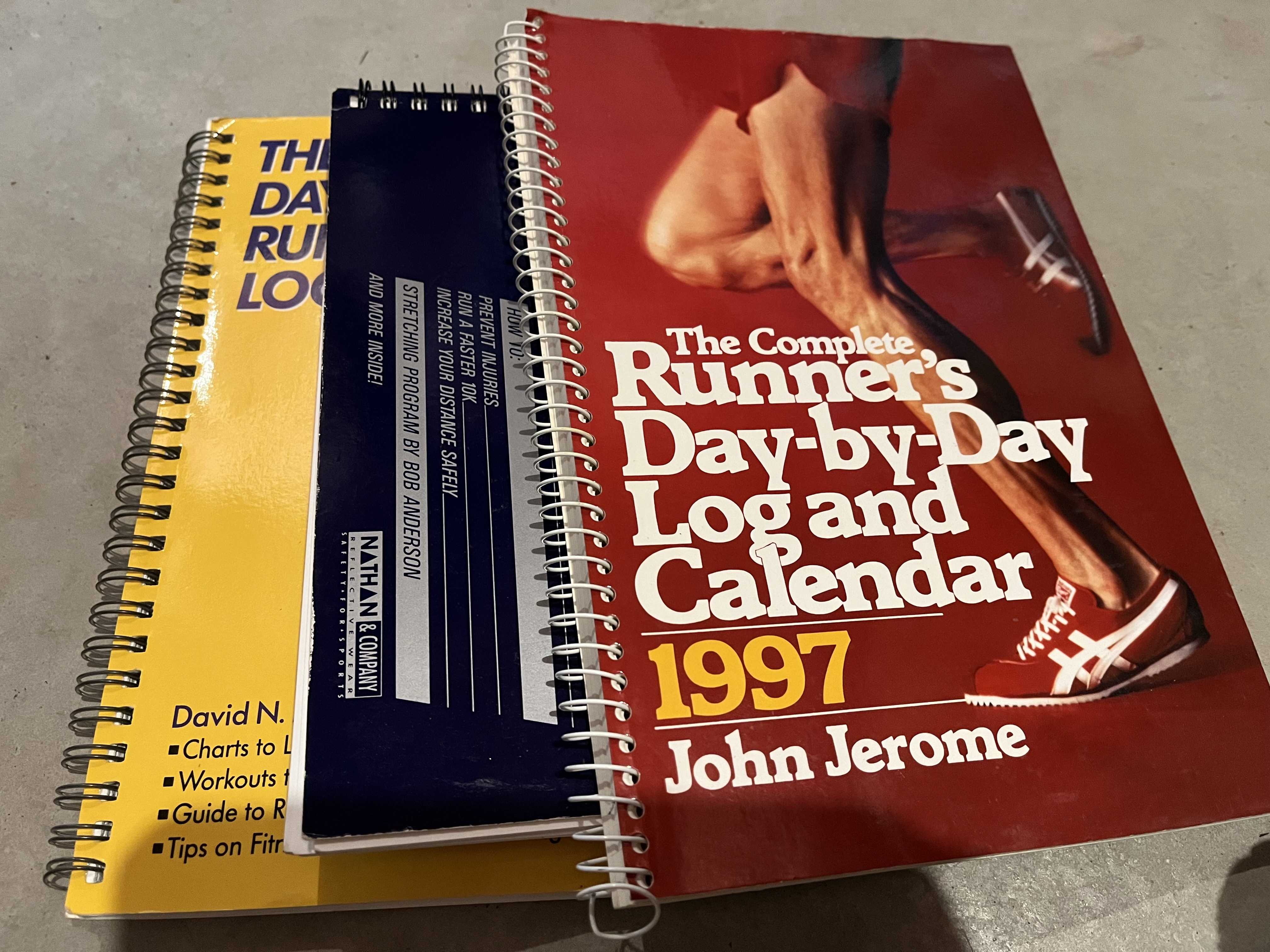
Recently I've gotten back into running somewhat seriously and have plans to complete my first marathon later this year.  This combined with my full-time job of mothering gave me the urge to log the lessons learned over my miles of running, for historical and educational purposes for my kids.  Earlier this year I also read Running to the Edge, and the stories from that book resonated so much it really caused me to reflect on the tremendous impact running has had on my life.  As usual, I'm sharing on the blog in hopes that these stories are relatable and can serve to educate or inspire.  

[I'll indent and italicize lessons intended for kids and simply italicize lessons that might be applicable to grown-ups.]

Running has been a foundational part of my confidence and identity since I was a child. As a child, I was always the smallest in school, mostly because of my mom and dad's small genes but also because I was always the youngest in my class, turning five during Christmas break of kindergarten year. I learned early on that "good things come in small packages" and owned that mentality.  In the neighborhood, I was typically considered the second fastest cousin, after Mikey. When I was in seventh grade, I learned that I’d gotten more than my share of slow twitch muscle fibers when I stepped on a track for the first time and ran a mile in 7:17. I joined the track team shortly thereafter and quickly became something of a local star. 

Through running, my self confidence really blossomed. Small might have left me underestimated, but not weak.  I knew I had God-given talent and this really fueled my spiritual life. I prayed nightly for many different reasons but an upcoming race was often on the list. My parents had laid a strong faith foundation.  I'm not sure why, but I set rules for myself and my prayers regarding running. I couldn’t pray to win, and I could only ask for three things. It seemed like my prayers were usually answered. 

I backed it up with hard work. Being a farm kid, I’d known how to outwork the competition doing everything my coaches asked of me, and more. Yes, I had some good genes, but I also had farm kid grit. My dad and my uncles wouldn’t let me forget that. It was a secret ingredient to my success and allowed me to develop pride over the farm, by which I was otherwise generally embarrassed. All this was formative in countless ways, to say the least. That confidence really came in handy as an 80-pound high schooler who was new to public school and felt rather invisible next to the other girls, who were so much more developed and mature, in many ways. 
I was often underestimated or ignored due to my size, but early on I claimed this as a secret weapon of sorts. Don’t worry about what others thing of you, it isn’t between you and them. 

Your body is given to you by God.  You aren't in control of the size of your body as a child.  Take good care, eat well and exercise, but don't let how you look define you; it's only a small part of who you are as a person.  If God made you tiny, know He also made you mighty, and He'll use all of you for His good works. 

Discipline and hard work that you learn through your favorite activity can be applied to anything else in your life and if you have a strong foundation as a child in this regard, the transition comes almost effortlessly later in life. 
Although I was competitive in the sense that I placed in the top few in most races, competitiveness isn’t a hallmark of my personality. My first cross country coach would get so annoyed when I’d lap other runners on the outside, verbally encouraging them, rather than insisting they get outside.  He used to joke that he was going to stick me in a cage and poke me with a stick until I stopped being so nice. The truth was, I was competitive, I wanted to win but even more so wanted to do my best. I was most competitive within myself. On the course or the track, I valued amicability more than ferocity or power.  Many people saw that as a weakness.  Later in life, I'd come to identify Encouraging as one of my Spiritual Gifts. 
It's important to have boundaries and not let people take advantage of you or put you down.  But, good sportsmanship is a bit of an underrated characteristic these days and it shouldn't be.  Winning while kind is an art form worth practicing.  Performing better than another person or team is no reason to be mean, rude or entitled.  Start now.  Learning to put others comfort before your own on the field or the track is a great way to build character that will serve you well in many aspects of your life.  

Early sophomore year in high school, my great grandma - the one who’d traveled transatlantic as a teen from Spain to Cuba and then Cuba to NYC, immigrating my dads’ family to the US, died. It was the day of the first cross country meet of the season and I remember my dad telling me, "win it for Grandma." It was a hilly, woodsy course that I can still picture to this day, feeling her strength as I started my season off with my first win. My sophomore year continued and ultimately, was the best year of my running life.  I peaked when I was 15. 


As a southern Marylanders, our favorite indulgence was a work boat where we went out most every weekend to catch crabs. But, during spring track that year, I’d been pestering my dad whenever Red Lobster commercials came on that I wanted to try lobster. He insisted it wasn’t worth the price and crabs were better, but if I ran under 5:30 he’d take me there. A few months later, at the State meet, I came in second in 5:25, and found out Dad was right; I liked, but didn’t love, the lobster. 

As a Junior, I ran well, learned to weight lift and was blessed to be developed by some really incredible coaches. Running also gave me the gift of pride in my parents, and appreciation for them. They were known as key cheerleaders for the entire track and cross country teams; always reliably on the back stretch or a quiet and tough portion of the course, cheering for everyone, not just me.  They also coordinated our weekend treks to Fort Washington for hill workouts.  

My parents bought a treadmill and kept it in their second floor bedroom, and although I don’t remember running on it terribly often, I remember thinking the whole house was shaking when I did.  The only brand name anything I ever owned as a child we’re running shoes, my parents spared no expense when it came to my shoes. Best of all, my mom bought herself a Nike tee shirt which read, "Mary had a little shoe, it’s sole was filled with air and everyone who Mary raced didn’t have a prayer.” She wore it often, as her pride became my own. 
Child, pride from your parents is one of the sweetest gifts on earth. Soak that stuff up. And please know that it’s not the winning they’re proud of. It’s you and how you’re spending yourself, focused and determined, testing your limits and showing yourself what God made you to do. The accomplishments are nice, but they aren’t the most important part. 

I ran before sunrise and in the afternoons, at practice or when there wasn't any, and before heading to the tobacco stripping shed or field.  I'd run on backroads and main roads, trails and through farms. A dog bit me. Everyone honked at me.  It all made me feel strong.  Running put me in the local paper several times a season and took me to NYC for cross country regionals, and also to summer running camp, all of which had big impacts on my understanding of the world and my place in it. I was a big fish in a little pond. 

I ran track and cross country (CC) with some great girls (Val, Amelia, Jessie, Michelle and Shannon, to name a few) who were also talented, strong, and supportive.  But there was one girl on the CC team (Donna) who I really admired.  She was, in my opinion, pretty slow.  But, she carried herself with the same determination and commitment as myself and the other girls I mentioned. Without the chance of winning, I wasn’t entirely sure why she did it.  But, I was inspired and I would think of her again many times in the years ahead.
 

As a senior, I had some proud moments. One was wining a weight-lifting completion, benching 45% of my body weight the most number of times, I think it was 50 or 60-some times; more than all the football players and others in the class. While I ran and placed well in CC and indoor track, I suffered a stress fracture early in the outdoor track season and struggled. 
“But they that wait upon the Lord shall renew their strength; they shall mount up with wings as eagles; they shall run, and not be weary; and they shall walk, and not faint” (Isa. 40:31)
This was first bible verse I can recall committing to memory. 

Getting diagnosed was interesting, because I had “hip” pain, but it was bony - ischial tuberosity to be precise, and while I couldn’t name the bone at that point, I could touch it, and insisted it had to be broken. The doctor didn’t believe me but reluctantly ordered the X-ray, after my mom all but insisted, citing “this girl knows her body.” She’d never done that sort of thing before, but said I knew my body, and she was right. Of note, the doctor didn’t comment on my weight, which was about 90lbs at 17, or ask about my periods, which hadn’t started until I was 15 and had been irregular since, or ask about my eating, which I imagine my mother should have said was that of a horse.  I didn’t think his lack of investigation was weird at the time, but later would question these gaps in thoroughness. 

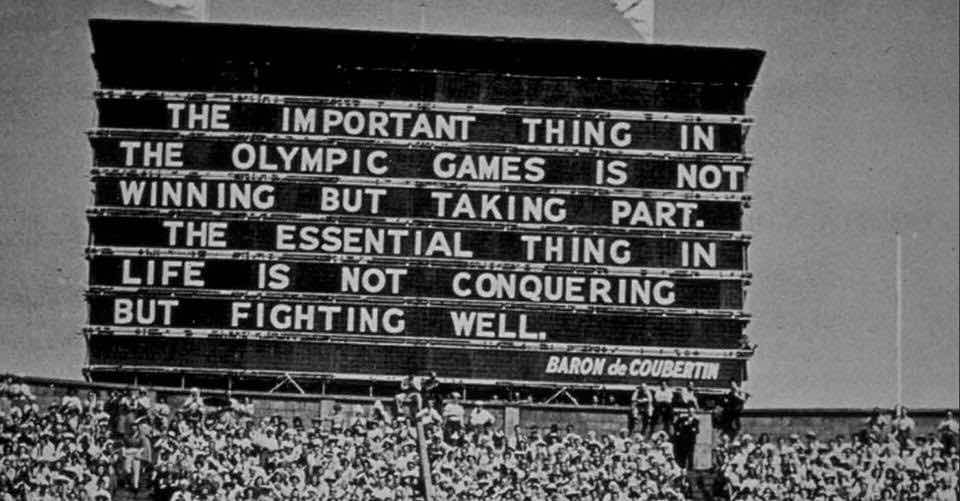
During this time, I stumbled upon an interesting quote by founder of the Olympics, Baron Pierre de Coubertin1908 in London:


This became my motto. 

The following year, I was thankful to be welcomed as a walk-0n to Mount Saint Mary’s college, division 1, track and cross country teams.  My first memory is from a preseason event where I felt a little surprised during the uniform try-ons to learn I was a size small, whereas most of the rest of the girls on the team were extra-smalls.  I’d never been bigger than anyone I raced or trained with. 

Division 1 (D1) cross country was everything you might imagine it could be: awesome and exhausting. I loved it. I loved the running, the girls (and definitely the boys!), and I loved the notoriety it gave us - running around campus in a sports bra everyday helps people notice you in a way I’d never really experienced back home. (Of course, I'd always worn a shirt back then.) We ran 60 miles a week and I gained 20 pounds by Christmas. A lot of it was muscle, we ran two-a-days (2-3 in the morning, 6-10 in the afternoon) and lifted too, but some of it was ice cream and waffles for dinner. I ran well at practice, but poorly at meets, and didn’t know why. 

One thing I did know, was that D1 girls were tougher, more talented, and hungrier than anyone I’d ever known before. (Hungrier, both for seconds at dinner as well as athletic achievement.) I wasn’t one of them, but I was ok with that. In indoor track I trained for the 5k and did alright and was shaping up for a good outdoor track season.

My coaches thought I’d excel in the longer distances, so I was training for the 10k, when I got 4 stress fractures in my shins. Again, no one asked any questions about my menses or my diet, but I did get a dexa bone density scan and learned I was osteopenic. When I mentioned it to one of the athletic trainers and asked about the female athlete triad, he said "you're not skinny enough to be anorexic." I knew that. I also knew that I ate twice as much as some girls on the team, and was the shortest and heaviest one. Nevertheless, the shame I felt didn’t feel quite right and it lingered. 
When something a coach or a member of your team says or does doesn't feel right, tell your parents.  Your parents want and need to know.  You won't know if they can help you if they don't know what's happening.  And if it's not a big deal, they'll help you understand it.  

Parents, let us not underestimate the societal effects on our children's body image.  Remember that anorexia isn't about being skinny, it's about control.  Our children seek control over themselves when the rest of the world feels so out of control.  Thankfully the idolatry of skinny does seem to be lessening, but for those of us with kids in sports where being light is a competitive advantage (running, biking, wrestling, dance, cheer, gymnastics, among others), it's important to keep their health in the forefront of our minds.  And finally, let's make sure they know that how they look does not influence their value or worth, not even a little bit.   

After the summer, I came back ready to run, but ultimately didn’t make it through the season, following a close friend and co-walk-on when she decided to quit the team. It’s a choice that may have been good for my future career, as I had new priorities (premed) and was clearly not on my way to running professionally.  Nevertheless, it's one I regret.  I wish I wouldn’t have copied my friends' choice with so little independent/personal discernment.  I wish my allegiance to her hadn't been greater than my allegiance to myself. 
Kids, have the self confidence to make your own choices.  Take the time you need to think about what's best for you and you alone.  Don't join or quit activities just because your best friend or love interest or the cooler kids are doing it.  Pray about it, talk to your parents, and then stand firm in your own choices with confidence.  
Ultimately, however, stepping down from the team, promoted growth in me.  As I reflect now, I wonder what I said when I returned home and had to explain why I wasn't on the team anymore?  I'm sure I was asked frequently how the glory days had passed? Although I cannot recall specifically, I imagine that I admitted I wasn’t running well, which was probably hard given the enormous portion of my identity that it had made up.  I was a little fish in a big pond now.  That being said, I think this might've been birthplace of the authenticity I’ve so dearly needed and cherished over this most recent decade.  
Choosing to end a season of life and leaving an activity behind doesn’t mean you’re a quitter or a failure.  Moving on when it’s time is healthy and mature.  Especially when it comes to sports, many children peak (like I did) when they're in their teens.  Less than 2% of all college athletes go pro and depending on the sport, 1/100 to 1 in several thousand high school athletes end up in professional sports.  

I didn’t have what it took to run D1 and I'm thankful I was able to admit that and move on.  Looking back, I’m thankful that my pre-pubertal body hadn't shackled me (via scholarship) to something my post-pubertal body couldn’t produce (competitive D1 running results). 

Through the rest of college, I ran and biked causally. It was then that I believe that my legs became my primary vehicle for exploring my love of nature, and how the joy of being outside became a primary driver for my runs and rides. My spiritual life also remained strong during this period, and I remember one of the first times I ever felt like God didn’t answer my prayers was when I got back my MCAT scores (the medical school assessment test). I felt devastated by their results but later thankful God still had a plan when I was accepted to LECOM. 

In medical school, I was a little fish in an entirely new kind of pond and I struggled here a lot more than I expected to.  However, I’d built some resilience that helped carry me through.  I started going to a gym where I focused on lifting, and picking up guys. I enjoyed this quite a bit.  

During third and fourth year rotations and starting Residency, I got back into running more.  As always, running relaxed and empowered me, I would pray and “solve all the worlds’ problems” out there on the roads. On the treadmill, I’d do sprints by Hail Mary's. It was a big part of my spiritual life. By then, I was in a mentally healthier frame of mind and aware of how my body image suffered over the years. I stopped buying magazines so as to avoid the sight of “perfect” bodies and I got rid of my scale; and I'm proud to say, I haven’t had one since.

I also stopped wearing a watch while I ran because it really didn’t matter how fast I ran, and this freedom helped me enjoy running more. For example, as a teenager I’d never run a 5k as slow as 24 minutes. But as I aged, this became more like a lofty goal, and that was hard to reconcile; it took away some of the fun of the exercise, having once been great but no longer. I need to mourn that, shed it, and become a new runner, and that was easier without a watch. Who cared how fast I ran? Plus, I had a pretty strong internal pacer and more than my share of slow twitch fibers, who helped me run consistent, albeit slow. 

Around the time of residency graduation, and the start of my marriage, I ran a few half marathons and was in pretty average shape.  Being in the healthiest relationship of my life, I also began feeling great about my body image. I trained my then puppy, Ruby, to run, and we had fun. 

I ran consistently until my second pregnancy, which we lost. The loss was genetic and unrelated to exercise or my body habitus, but I remember realizing before we lost her, that my weight was under my usual and starting drinking chocolate milk like it was my job. This stuck with me and as the miscarriages progressed, I gave up running almost entirely, afraid that if I got too light, I’d miscarry or not ovulate. I was doing NFP and had taken my temperatures daily for a few years and knew for a fact that I ovulated almost every month, but even that objective data couldn’t withstand my anxieties and fears, so running was a rarity.

As I look back on this time period, I wish I'd run more then. I wish I'd been brave enough to put myself first, although I know that sounds weird.  Running is certainly not more important than child-bearing or rearing.  But looking back, it's easy to see that my mental health would have improved if I'd had the courage to keep running.  

In the superficial sense, I also wish I'd tried for a marathon during my early thirties because trying now in my early forties is probably going to be so much harder and slower!

After 'baby 8,' my seventh pregnancy, which I carried to term, I was 37 and sure I was done having babies, but in the worst shape of my life. Work was busy and running was hard. When I tried to get back out there, it was always in short bursts. Running slow while feeling old wasn’t as fun as I’d expected. 

And then came the pandemic. About four months in, I got sent to work from home and struggled for dozens of reasons, not the least of which was that for the first time in my life I was truly sedentary. Weight piled on, but it didn’t matter since I never saw anyone.  

Ultimately however, the weight wasn’t the reason I started running again, it was the stress.  I was still old and slow, but I got back in the habit, and quickly fell in love all over again. When the pandemic isolation felt heavy, being with the trees helped; when all the world seemed so out of control, breathing in the clouds helped. 

And then we brought in our foster son, and what had been an already chaotic and challenging season of life became unrecognizably difficult.  I was carrying many burdens of modern motherhood, in addition to the fact that I’d thrust my family into discomfort like we’d never known before. Most of my relationships were strained. I was running some, but feeling guiltier than ever, another burden I just couldn’t bear. 

That June (2021), I found myself longing for a drink, an alcoholic drink that is, and that was never something I’d felt before. Although I’d binge drank a bit in medical school and residency, I was never a weekday drinker at all.  Additionally, I didn’t drink at all during the years trying to conceive.  As a historical note, I have a few second degree relatives who suffer from alcoholism and my mom was a perfect example of sobriety for my siblings and I throughout our lives. She always avoided it, knowing she might have the addiction gene, and avoiding any such temptation or slippery slope. I was reminded of this, knowing that just when I felt I “needed” it the most was exactly when I knew I had to avoid it the most. 

So, I turned to the roads. I needed to run. 

Soon after, I made the grand decision to resign from work, and two months later the kids went back to school. Immediately, I hit the roads and picked up where I’d left off so many years before. I'm not sure if it was the base I'd built during the pandemic, or just sheer desperation to feel in control of something in my life, but it didn’t feel as hard to get in shape as it had before. 

I got map-my-run, started timing myself, and eventually bought a Garmin too. I’ve been able to make these incremental changes and get stronger slowly without feeling obsessed. Although I will note that when deciding on a marathon training plan, my tumultuous history with running was evident.  I couldn't stomach a "beginner" plan, although I am in every sense of the word a beginner marathoner (having never run any more than half the total race distance before starting to train).  Ultimately, I made my own plan, a sort of hybrid between the intermediate and beginner plans, which sat better in my psyche.  

Throughout this last year of running, my predominant emotion is gratitude.  I’m just so thankful.  After my infertility and some other medical problems, I'd begun feeling disappointed in my body, like it betrayed me, more than once.  But through running I've come to feel more balanced, remembering my many gifts; not taking them for granted.  I realized I'm neither old nor slow, and I need to try and eliminate those unhealthy thoughts from my internal dialogue - I'm just out there putting one foot in front of the other, doing my best.  Now, I try to intentionally recognize and appreciate the strength of my body, feeling blessed it is as well as it is and praying it stays so for many years to come.  

I'm thankful I have more than my share of slow twitch fibers which give me endurance to enjoy many miles.  Thankful the endorphins can flow and naturally relieve my stress.  Thankful that I’m able to let my sorrows and frustrations out on the roads and trails, breathing in the trees and clouds instead, unleashing my prayers into the wind. I know my running is a gift, not the articles-in-the-paper kind of gift anymore, but still the kind that gives me confidence, and stamina for the rest of life.

My renewed commitment to fitness is well timed, as I’m raising 4 boys who will soon outweigh and outrun me.  We’re setting an example of healthy living and I’m proud of that. 

But mostly, I see this running as a gift to myself. One I should have never stopped giving myself. One I hope I’m able to do for many years to come. 

Some days, my run is the best part of my day, and at first that made me feel guilty. Over time I’ve begun to shed that guilt. Perhaps in part due to the mission-driven approach we've taken to our parenting, if I'm being honest, raising our four special boys is stressful more often than not.  Or maybe that's just true for all parents.  Either way, I now recognize that it's perfectly healthy to admit that I need and deserve my own personal happiness, in addition to but distinct from the large amounts of value and joy I gain from my family. Now I’m more present and mindful, and just so thankful to be able to have a joy and/or peace filled run as part of my day. 

This year, as a resolution of sorts, the word I chose is pray and I’m praying I’ll become more and more mentally tough, patient, wise, and resilient; possessing equanimity. I’m hoping through commitment to prayer and running, that I’ll be able to steady myself in the challenges that linger ahead. 

As my marathon draws near, I’ve been impressed how during the long runs, my mind struggles more than my legs or my lungs. Self doubt (in addition to plantar fasciitis) is my biggest obstacle. I’ve also enjoyed how much marathoning is the perfect metaphor for mothering.  When you get to those middle miles, ain’t nothing easy about it. And that's part of the fun - pushing forward anyways.  Growing through the tough stuff.  Believing in my heart and feeling in my body that I am faithful, strong and steadfast, even if this journey doesn't go like I plan. 

In summary, what do I hope for my kids and their athleticism: 
Child, I am proud of you, now and always. Use your God-given abilities to their greatest potential. Maybe you'll be small like me; maybe you'll peak early like me; maybe you won't.  Either way, don't let it define you. Develop a good work ethic and stay committed, allowing your favorite activity to grow in you many characteristics that you will be able to use in future aspects of your life. Be on guard against becoming obsessed, know that this activity is only a portion of your life and let's work together to keep it a healthy portion. Use it to stay healthy, both physically and mentally. Be a role model for sportsmanship and cultivate a positive attitude on all the teams you ever have the privilege of participating on. Be successful and proud, and give God the glory for all your achievements. I cannot wait to watch and support as you discover and hone your talents! Never forget, YOU are God's Masterpiece!  

Ephesians 2:10:

For we are God’s masterpiece. 

He has created us anew in Christ Jesus, 

so we can do the good things 

he planned for us long ago.

Monday, March 14, 2022

Breakthroughs

It’s been 16 months since we became a family of 6 through kinship foster care.  What an intense time it has been. 

During this time, I have wanted to blog here more than I have.  My partner and I see education as one of our core values and part of our family mission.  And so, I long to leverage this platform to inspire and educate my friends, whether it be faith-based approaches to adoption, infertility, putting values into practice, mental health, medical marriages or women in leadership.  I feel invigorated by sharing and hopefully propelling others in healthy and meaningful directions.  

As a leader, I've come to find that authenticity was the value I hold most dear.  Authenticity is being true to yourself, not false or copied but genuine and real. Within the confines of the patient safety movement this is the most essential ingredient to effective teams and quality work.  

To me, authenticity means speaking the truth.  I call myself a walking confessional at work, this is part of my style, my persona and I believe it to be an effective tool and thought leaders across industries agree (Amy Edmondson's The Fearless Organization is an inspiring text on this subject).  Being real on the job, telling true stories, being forthcoming with my failings were my hallmark.  This pattern of behavior inspired others to be authentic too, which breaks down the walls of silence which make healthcare, and so much of our lives, so dangerous.  If we had a significant error that led to harm or death, I'd be careful not to let the PR team "pretty it up" too much.  By telling the truth and owning our mistakes, more truth could come out, allowing us to get to true root causes and real solutions.  I knew the power of this habit and saw the results it could produce everyday.  

Authenticity is is a key value I strive to practice in my personal life too.  It's the one thing I really dislike about social media, so much of it seems fake, copied, unreal.   Yeah, I want to look pretty in any picture I post online, but I also want to look like myself; round cheekbones, weedy garden and all. 

In a recent blog, I mentioned how humbling trauma-informed parenting feels.  That's the truth.  It's getting it right a lot of the time and also getting it wrong much more often than we care to admit.  It’s knowing that those times when you don't get it right, you might be retraumatizing a kid who's already been through too much.  My words and actions.  It's exhausting and sometimes it’s rewarding, but not always. 

I'd like to be brave and authentically share bits of such details with you regularly.  Because then, I believe, my friends will know that this is what adoption looks like in our family, and that I'm a safe place to share if you’re struggling too.  I'm a student of Brene Brown and believe all that vulnerability is the key to intimate and real relationships. 

That’s why I began this blog some ten years ago, after all. My therapist encouraged the idea, and sharing the dark web of emotions I suffered during my miscarriages brought healing for me and connection with so many of you. It’s been a great gift. I’ve similarly been inspired by others who share their triumphs of overcoming of challenges. We learn from one another, develop community and thrive in our belonging. 

Through all this I’ve become a bit of a spokesperson for adoption, and I embrace this identity.  

As this blog continues and my life transitions from infertility to a mother of four complicated boys, I wonder, how can I share our new stories?  These stories are dominated by the kids and also some dark emotions.  Healing and learning could transpire through that as well.  But, perhaps my sons don’t want to be the poster children for adoption? Maybe they don’t want to be a spokesperson for mental health. My choices now have to respect and prepare for that possibility later. 

There’s great tension here, it's hard to strike the right balance.  Unable to find the right words, I opted to not write a Christmas letter this past year.

If I only write about times where trauma or sacrifice are on display, it may seem complaining, ungrateful, unfaithful, or even worse, like I'm looking for praise. On the other hand, sharing solely the good times feels inauthentic; in it's least harmful forms it's an unreal and slanted view of our lives, and in it's worst, it's exclusionary and makes others feel less than.  In both of these ways, social media can tempt us into over sharing, for promotion of our own authorship or follower-count.  I want to steer clear from all that. 

I also worry if I go into detail about the non-preferred behaviors my kids are displaying, or tell you how often these challenges occur, I worry that I'm objectifying my children.  The internet is forever.  And these kids are human beings who deserve dignity and respect.  So, how do I balance their dignity with my authenticity?  

I think this is a major challenge facing society today.  How do you become an advocate for those who are undervalued or judged in our society without objectifying them and stripping them of their privacy?  

This is particularly important with children and with adopted children.  Theirs is not my story to tell; it's one of the first things you learn in adoption education courses.  One day, they'll be teenagers or adults and they'll want to be the author of their own story.  Adopted people deserve to share their family history and story in the ways they feel comfortable, just like the rest of us.  While I do tell friends and family in confidential conversation about our struggles, I don’t want to “tell” everyone through the internet.  I'd hate to use this platform to journal our struggles and triumphs in parenting special children now, for the potential educational value of sharing, at the expense of my children's resentment later.  It's just not right.  

On the other hand, if I stay silent about the mental health challenges we have in our household, we miss opportunities for connection, belonging, support and for inclusion of others with similar struggles into our community.  Silence perpetuates the stigma. Silence keeps us alone. 

So, this is my attempt to share an honest and useful selection of stories that bring good educational value without much risk of objectifying or embarrassing my children, or glorifying myself.  

So, what have these past 16 months been like? Well, this has been the hardest year of our lives, didn’t seem like the best Christmas letter intro, but it’s the truth. It’s the only thing I’ve known with 100% clarity some months. 

Its been chaotic and challenging. They're busy, entertaining, mischievous and exhausting.  All of us are wading through our own unique waters of trauma, sacrifice and conditional and unconditional love each day. 

During the past 16 months, our tightly knit family became stretched into a new and unfamiliar form.  

On a macro level, here was our year: 
  • 4 months of honeymoon period 
  • 4 months of escalating and unraveling 
  • 2 months of reengineering 
  • 6 months of steady progress leading us to now 

On a micro level, it’s important to note that all six of us have gone through escalation, impulsivity, and reengineering; I’m not just talking about one or two of us.  This may have occurred when we were the targets of another individual’s anger, or as we each grieved our collective and individual losses. 

Most months we average about 15 hours of therapy and adoption visits per month. We have several therapists and social workers engaging with us each week and month, helping with formal diagnoses and oft-changing behavioral challenges. 

This has been sacrificial and forces us to put our pride aside. While we feel like we embarked on this journey eyes wide open, it nevertheless has asked more of us than we expected. We’re completely committed, but that’s not to say they’ve been easy. It’s a lot of silent dues-paying now, with the hopes of big payoffs in terms of children’s character development later. 

In the purely logistical sense, these frequent appointments mean skipping play dates (my kids all-time favorite thing) or cutting them short and coming in early, for therapy visits, every week. It means everyone we know well knows we’re in therapy and seeing at least one therapist every week; which is honestly a little humbling for me. (I wasn’t exactly embarrassed to need therapists, but let’s just say that the move to feeling proud we’re getting the help we need has taken some time and effort.) 

These frequent appointments also mean having a team of professionals advising us on our responses to certain behaviors, asking questions that get us curious about our own tendencies and inclinations, and suggesting that we work on our co-parenting style.

This takes a weird combination of grit and absolute desperation for God’s help in everyday moments. It’s also a weird combination of tiring and joyful. I often use the work rich to describe this time. What a year. I’m often at a loss for words. 

The biggest lesson I think I’ve learned through all this has been to slow down, to fill our days less close to brim full, to allow enough time for the children to transition successfully between events.  This is counter to my and my husbands natural inclinations. Perhaps I should have mentioned that my second-favorite value is efficiency. I really value, admire and seek speed. 

And if I’m being honest, the pace I like to keep and was in the habit of keeping when I was working full time before, it’s a bit selfish. It was for my glory, the glory of “having it all.” Juggling so many priorities, being efficient with my time, was a survival skill. When my nanny was working, I had to laser focus on myself and my agenda, so that everything could get done before dinner. I didn’t mind the aggressive pace and the focus helped me accomplish my goals, so it was actually rather comfortable for me.  But when I had to readjust to much more time with the kids, running their daily schedule and focusing entirely on executing my goals for them, I quickly learned that my old habits didn’t serve us too well. 

A popular quote the team has shared with us which really help transform our thinking is

He’s not giving me a hard time, 

he’s having a hard time. 

This new mentality is hard to sustain, but it upends our selfish perspective and keeps the trauma-informed approach at the forefront.  Full agendas with efficient transitions - that modus operandi doesn’t work for families with special children. We certainly aren’t seeking perfection but we can’t even come close to happy or successful when we rush. Action packed days just don’t work; they’re a recipe for disappointment for this team.  At first, I resisted the change, but eventually (after enough failures) I realized there is so much more joy and peace in a relaxed pace. And guess what?!  I don’t have to choose busy, it’s a popular choice that I can and do reject. 

What’s this look like in real life? Cue the utter reliance on God for patience. Plus some practical changes: some serious decluttering of the schedule, letting go of my to-do list. Lots of 5 minute warnings, setting of timers, and something called the sock box (a box of socks in the mud room near the shoes, for kids who forgot to bring socks down when they came). 

Slowing down and spacing things out allows my kids the chance to excel. They don’t always excel, even with what I feel like is more than adequate time, but it’s a lot more likely. Me weighing them down with my disappointment about us being late or forgetting to bring something to our next outing certainly won’t help them thrive. It’s a burden they shouldn’t have to carry. Although we do fail regularly, we are trying hard to avoid causing shame or using shame as a way of shaping our kids behavior, due to its unhealthy long-lasting effects. 

So what dividends have all these therapy appointments, and slowing down of the expectations earned us?  After 16 months, I think I can say that we are now in the midst of a series of small breakthroughs. 

Here’s an example of a tough moment turned positive: 

Our family-based therapists were at the house during their weekly visit and we had finished an ecomap activity.  The boys had moved on to target practice with nerf guns and no one was taking turns in good order.  This ended with some swings between a few boys requiring separation by me.  Everyone was frustrated.  In the past, this sort of incident might’ve continued to escalate, and creating chaos and tension that would have lasted 30-60 minutes. But on this day, several minutes later, one boy came out of the office with this letter: 


This note almost brought us all to tears. It was one of the first gestures of genuine kindness and remorse for hurting someone he… cares about

Darn. Whew. 

Thank you, God. Thank you!!

This one nice note turned out to be the first in a series of small acts of kindness that are forging new bonds. It’s taken 16 months, but a few times in the last 1 month, the youngest two have talked about how the boys are “becoming friends.”  They occasionally give each other real compliments and genuine apologies.  

The canyon between long loved brotherhood and newly forced brotherhood is less wide.  Our family team is really bonding. All this progress also has us ready to “graduate” from family therapy soon (which will lighten up our committed hours per week significantly).

Without a doubt, we’ve got a lot to be thankful for. The hard work and intentionality has transformed each of us individually and as a whole. 

If I’m stepping fully into my authenticity, here, I think I hesitated to write here because of my uncertainty and doubts. We’ve had faith throughout this past year, but it’s still been a dark season, and that has made it hard to authentically share, especially in an uplifting way. Now that the chaos has stabilized, I think I’m able to see more light, which makes sharing on the broader platform easier. 

As peaceful moments are becoming more regular, I’m more excited to share what we’ve learned, and we’re all embracing this new family a little more tightly.  We’re getting comfortable and settling in.  Like in any community or brotherhood, there will always be tough moments and bad days.  But as we enter this next stage where the adoption becomes final, I think we’ve all got a lot of hope for tomorrow. 


I’ll leave you with these words from Jordan St. Cyr, in Weary Traveler, which have encouraged me recently. 

Weary traveler
Beat down from the storms that you have weathered
Feels like this road just might go on forever
Carry on
You keep on givin'
But every day this world just keeps on takin'
Your tired heart is on the edge of breaking

Carry on 

Weary traveler, restless soul
You were never meant to walk this road alone
It'll all be worth it so just hold on
Weary traveler, you won't be weary long
No, you won't be weary long


Monday, November 1, 2021

A Reason to Stay

I never wanted to be a statistic, but here I am, one of over 4-million Americans who quit their jobs in July 2021.  They're calling it The Great Resignation, and numbers have continued to increase in August and September. Here’s what The Atlantic had to say: 

Quitting is a concept typically associated with losers and loafers. But this level of quitting is really an expression of optimism that says, We can do better.

I haven't written much about my reasons for resigning because they're complex and largely private.  But, I think 2021 has been the hardest year of my life and 2020 was no cakewalk either.  I wouldn't cite the pandemic as the number one or number two reason for this, but it created a foundation of unease, straining what was an already fragile juggle.  

The passing of my mother-in-law has made this year particularly hard, my husband and I still mourn her loss regularly, because of the way that she enveloped us in both emotional and practical (hear-babysitting) support. Her passing has also reminded me that I'll only live once.  People say 'your kids will only be young once.'  It's become a cliché for a reason; it's true.  Time passes and while working, I only get to bear witness to and influence a fraction of their time.  

Secondarily, the addition of another child into our home has disrupted the balance, leaving the rest of us a little more hungry for attention and focus from one another.  We are all grasping for stands of control, however small, in an attempt to regain some sense of steady state.  There are only so many hours in the day, and as I alluded to in my blog when I first returned to work in February, my family doesn’t always get me at my best if I’ve used up all my empathy and energy at work.  

My 4-million friends and I come from low-earning and high-earning jobs alike, across many disciplines and we cite many reasons; although it seems our logic isn’t as different as our backgrounds may be.  

Healthcare has been particularly hard-hit.  The pandemic has led to an "unprecedented exodus of women from the medical workforce." According to an article written back in October 2020, COVID-19 may have set back women's progress in the workplace back by 25 years, largely citing a lack of child-care options.   

I worry that my resignation may contribute to that set-back.  How will my exodus from a position in upper management affect, consciously or subconsciously, the decisions of the executives who supported me in their future hiring's?  Will they be reluctant in the future to give the next talented and passionate mother with young children a chance?  How can we as a society prevent that?  

As a result of all this, healthcare organizations have recently seen the #GiveHerAReasonToStay campaign, a call to action to find and act on specific ways to support women during this critical time in the industry.  Suggestions from the AMWA based on research in gender-equity, include fair pay, promotion, ensuring adequate time off, child care and a harassment-free workplace.  

Feminists, #heforshe-ers, egalitarians and generally good people, I respect and appreciate what you’re trying to do here, I really do. These changes are honorable and essential.  

Was I paid fair, promoted, given adequate time off, adequate child care and a harassment free workforce?  I cannot give an unrestricted and honest yes on any of those. Let's look at a few of these in more depth: 

Fair Pay?  We talked about my husband being the one to take a step back but that didn't make sense for us.  The least significant of several reasons is that he makes more money, actually about twice as much as me.  It would make for a whole other blog if we were to do the 5-why's on why that is, since I was in upper management and we're both physicians, but I digress.  While money has never been a deciding factor for us in our careers (so very grateful for that enormous privilege), I will continue to pay about $1200/month for the foreseeable future on my medical student loans, so it does play a role in our decisions.  

Time Off?  While working, I felt I was allotted adequate time off. I used mine aggressively in comparison to most of my colleagues, who all seemed to have 300+ hours in their paid-time-off banks, which probably speaks to the majority mindset within our organization; something that sorely needs to change.  

Child Care?  When it comes to the AMWA's mention of adequate child care, I have most certainly struggled with this, particularly since the pandemic began, but I have never once considered it a responsibility of my employer.  (Perhaps the fact that I’ve never considered this as anything other than my own problem says more about my own biases than anything else?)  Although we had a reliable nanny, the combination of my mother-in-law's passing and the unpredictable nature of school closings and quarantines wrought havoc on our back-up options over the past year.  All this caused me to reflect often on a quote I'd scribbled down from a now retired senior executive.  During a merger he gracefully said, "I don't know why independence has been associated with success."  This stuck with me but I applied it to parenting while working outside the home. I have often lamented the fact that I flew so far from my parents nest, missing them and the ability to have their assistance in daily activities with young kids.  

So yeah, I had some unmet needs or expectations there.  However, a single reason to stay, like fair pay, just isn't enough a reason for me. I’m not sure having all would’ve done it for me. I didn't have one reason to go, I had dozens, some I've only just now begun to recognize four months into my resignation. 

After this intense period of sacrifice, and now that I’ve taken my situation in such a wildly new direction, I’ve enjoyed rediscovering my own identity, priorities, triggers and pleasures.  

So, what did I like most about my work?  Being in patient safety, I felt like I made a difference at a macro level advocating for quality healthcare in my community.  I also really loved the authentic relationships I developed with many colleagues and my team.   

Interestingly, though, making a difference isn't what I miss the most since leaving work.  I miss the power of decision making autonomy.  Four unruly children second-guess my decisions more than anyone “at work” ever did.  

I don't miss making a difference, because (maybe it sounds cheesy but) I know that my presence with my kids is making a difference at home more than it was at work.  I can see daily tangible and intangible proofs of this. Maybe that wasn’t always the case... maybe some years ago my impact on our system's quality had been greater, and since losing some of that tangible evidence of or appreciation for my impact, maybe my work became less fulfilling.  I'm not sure.  

What I want to say to those gender equity #GiveHerAReasonToStay campaigners: Thanks.  All organizations should take these measures on to retain their top female talent. For some women in certain situations, they may be reason enough to stay.  However...

You can’t pin the Great Resignation on the trappings of academic medicine or gender inequity.  I’d rather blame the modern life, the myth of perfection, or that busy is the new cool. Our choices need to change just as much as corporate or academic America. 

Maybe our biggest reason to stay is that it's actually easier.  The discontented but passive choice.  It's easier to stay where we're at, miserable but safe, letting the villain in our overworked and overwhelmed lives continue to be the corporation rather than our own choices.  Rather than stepping out in courage to take the reigns on our own lives.  That's not to say the only brave choice is quitting your job.  But, my juggle had become unbearable.  Just check yourself.  Is the chaos in your family exceeding your capacity?  Or are you in a steady state most of the time? If yours is pretty steady, great, I'd recommend checking every 4-6 months.  If you’re grasping for strands of control like I was, look for what you can change.  It might be as dramatic as a change in your work hours or something small like removing a child's extracurricular.  They aren't entitled to it.  It's a privilege, one that our family might not be able to take on right now.  

“We can do better.” 

Yes, I certainly could.  I am choosing better for my family and me.   

While personal and organizational growth fueled me at work, I didn't have any time to stop and enjoy the view.  At work, there was vanishingly small time between large projects.  At home, I felt guilty for ever putting myself first.  Only giving myself permission to run after everyone else was taken care of including the dogs and if the run was only the duration of one tv show for the kids.  When I (often) took time off for vacations or appointments with the kids, I “paid for it” catching up during off hours in the ensuing days and weeks. 

Equity advocates, please don't make me feel guilty for going.  Sometimes, gender inequity is expressed through how much pressure we put on women to "do it all."  Like focusing on your family isn't enough. As if choosing to work below your intellectually maximum capacity is shameful.  

Feeling guilty is no reason to do anything at all.  

In the words of Adam Grant from a recent WSJ article, I've radically started planning my work around my life, instead of the other way around.  And, since that major course correction 4 months ago, the majority emotion I've experienced has been relief.  A destabilizing load of stress has been lifted from my shoulders.  

I've been busier than I expected.  Appointments with 4 kids, my own chronic diseases, therapy for kids and family, plus foster-adoption worker visits take up a remarkable amount of time; but now it's time I have to spare.  

Getting back in shape has also taken time; time I've happily lavished upon myself, free from the weight of any guilt at all. 

Last week I hiked the Appalachian Trail, alone, for four hours.  The trail was very rocky in the Clarks Ferry region of Peters Mountain and sometimes I wandered off the trail unaware.  It was a strenuous hike.  I prayed, sang, sat and ate snacks. I took selfies over the valleys below while balancing on rocks as the wind blew cold at the mountaintop.  It was a beautiful metaphor for this new season of my life.  

This time “off work” hasn't been easy.  Of course, I'm still working occasionally as a hospitalist to keep up my clinical skills and licensure.  But, when I was juggling it all, people would often tell me, "it'll get easier when they get older."  I'm afraid people who believe that are kidding themselves.  It's another myth or trap we fall into.  I don't see it getting easier when my kids are in middle school, discovering their own identity, sexuality, or learning to use social media.  I don't see myself having more time when they're in high school, sports, music or youth group.  We'd do women everywhere a favor if we started getting real about how challenging it is to "have it all."  

Even while choosing to simplify, this year continues to be hard.  

Hard doesn't have to equal unhappy, discontent or disappointed.  We just have to make space for the hard, and honestly I'm really proud of myself for doing just that.  

What I've always known but am just now coming to appreciate is that the love of personal growth that I attributed to work, has been happening in the more home-based parts of my life all along too.  I haven't given that up just because I left corporate management.  Time to think grants perspective.  And Audible happens to work while sitting in a waiting room, gardening or cooking, just like it did commuting. 

Trauma-informed parenting is the most humbling experience of my life, and that's saying a lot considering my four years of medical school.  I've got plenty to learn in this aspect of my life; it's only a slightly different form of leadership.  I'm becoming empathic, observant and wise in new ways everyday, thanks to those wild boys.  

Working with my kids is strenuous and unrelenting at times.  There is also quite a bit of laughter, rest and flexibility.  

Out on the AT, I had the chance to take in the richness of this new season of my life.  It's rocky, so I almost lost my balance a few times and could've fallen or sprained an ankle.  
We’ve got a ways to go before we reach steady state.  But if we fall, we can just sit down and rest.  That's a pretty darn big reason to stay (at home). 

If it’s in accordance with His will, maybe there will be another season ahead where balance will come easy and my executive track ego (oops I mean talents) can take the lead.  All I know for sure is that for this season we've entered, I had to turn my focus inward, it was the only right choice for my family right now.  I'm already thankful for the results that choice is producing for my family and me.  

Friday, July 30, 2021

Anthems

On Sunday, July 4th, our praise band began the service with Raise a Hallelujah by Bethel Music and shared the writers’ story of singing praises “louder than the unbelief,” in the face of a family tragedy. 

To say the least, the story and song moved me. I sang, but the words wouldn’t come out, choked up with tears. I’d heard the song before, but on that day I really listened, humbled by the lyrics and their meaning. As we drove home, we talked about that kind of courage, and how we yearned for it, pretty sure we did not already possess it ourselves. 

Over the years, I’ve found many anthems to carry me along through rough and through wonderful times. Music is such a gift like that.  

In 2008, I discovered Third Day’s, (don’t you know) I’ve Always Loved You, and chose it for my father-daughter dance. 

In 2016, awaiting the birth of our second son, Thrive by Casting Crowns was on everyday in my house, inspired by "you know we were made for so much for than ordinary lives, we we made to thrive," we used the lines, “joy unspeakable, faith unsinkable, love unstoppable, anything is possible” throughout our messages regarding the adoption process to family and loved ones. 

In 2019, that same son ordered Nobody, also by Casting Crowns, on the radio, chanting along “I’m living for the world to see nobody but Jesus!”  Funny thing, he'd even request it at bedtime, saying, "hit it, Mom."  (If you've heard me sing you're laughing out loud right now.)

These songs have been like battle cries, inspiring me as I pushed forward against what feels insurmountable; they've focused me on my faith, allowing hope to course through my body. 

And that’s just what we needed on July 4th. 

“Discern work” had been on the prayer board in our bedroom for months. I’d been beating the pavement with my little frame as often as possible, begging for clarity and direction; unsure of where to go, but knowing I could not stay put. 

I told a few close friends, I’m going to need to hear the voice of God. 

Almost daily, there were struggles during and after "office hours," and the balls I’d become accustomed to juggling began to feel like they were made of lead. Guilt was piling up. 

Thankfully, my partner and I agreed, everything was on the table. We’d been reckoning with several options, and I thought I knew what I needed to do. 

Since the day I’d gotten the call about number 4, I’d known I was called to sacrifice. 

But on the 6th of July, a few dozen repeats into the Raise a Hallelujah stint, a perfect storm ensued. It was difficult in a number of ways, but my prayer was answered with beautiful clarity. 

Termination of parental rights occurred that day, too. 

Dang God, impressive timing, you are good. 

Later that night, I called my boss and told her I needed some time off. Last week I formally submitted my resignation. 

I raise a hallelujah, louder than the unbelief...

I'm gonna sing, in the middle of the storm
Louder and louder, you're gonna hear my praises roar... 

I raise a hallelujah, with everything inside of me
I raise a hallelujah, I will watch the darkness flee
I raise a hallelujah, in the middle of the mystery
I raise a hallelujah, fear you lost your hold on me!

These words didn’t make my miracle. But they did help my ears to hear, gave me those few last essential ounces of courage that I needed, and they’ve left me inspired each time I’ve run, walked or cried to them. This anthem empowered me to do what I needed to do. 

Necessary but not sufficient, of course, just like me.  

Thursday, March 4, 2021

Bringing Home our 4th Boy

The preparation, home study, and education required prior to bringing a foster child into our home is practically identical to the process for a newborn adoption.  Of course, we expected fostering a 4-year-old to feel different than adopting a newborn.  But how?  

First, let me set the stage.  In November 2020, here were our family dynamics: I am a healthcare administrator who had been working from home since May. My husband an academic cardiologist working at the hospital, working a good bit of weekend overtime for COVID.  Nanny takes kids to and from school, they'd been 2 days at school, 3 at home, until December when they returned to full-time in-school instruction.  

Kids: 

    #1: 10-year-old high-energy boy, 4th grade 

    #2: 6-year-old high-energy boy, kindergartener and biological half-brother to the newest little guy 

    #3: 4-year-old easy-going boy, pre-K 

In December we brought home:

    #4: 4-year-old boy, and biological half brother to the 6-year-old 

Every parent and every child is different; but for us, many parts of adopting an older child have been easier, at least on the surface, than they might have been if the child had been a newborn.  Probably most notably, there have been no sleepless nights.  There's a constant need that a newborn brings which a 4-year-old does not and we're thankful we haven't had to negotiate all that.

The day before I left to pick up #4,  I began a 3-month leave-of-absence (LOA) from work to take care of him and integrate him into our family.  Of note, this was perfectly well received by all of my colleagues and superiors at work.  In and outside of work, though, I'm certain some people have wondering if and why this was necessary.  Even we wondered briefly if the sacrifice would really be needed and feel worth it.  

The plan for this LOA was to be able to be fully focused on the newest member of the family and the whole family, without the distraction of work which often tends to takes a front seat when you're in healthcare administration (particularly during a pandemic) or a physician.  The plan was to be my best self, in tip-top parenting shape.  And I'd like to think that I was able to accomplish that (for at least 10 of these 12 weeks anyway).  

We knew that all four kids deserved this.  We knew they'd be hungry for it, but we didn't know exactly how that would look, how it would show up, until we lived it.  

A great deal of these three months has been filled with laughter and love.  Our newest member has a contagious laugh, that's apparently genetic because it sounds just like his biological half-brother!  He loves to be chased and tickled and fits right into the Pfeiffer wrestling club.  He is an expert on the scooter, sings twinkle-twinkle and the ABC's, and loves to hammer on the piano.  I think he self-soothes with music.  He's naturally kind and friendly.  As mentioned, he sleeps through the night and also eats well.  He began preschool with #3 after we got off of our travel quarantine.  

But this was also my hardest parental leave of all.  Perhaps that's true for all fourth-time parents.  Maybe every subsequent new-child-leave is harder for the parents.  While the act of parenting gets easier because there's not as much uncharted territory to negotiate, the unprecedented nature of the new volume of children is perhaps always more challenging at first.  Reactions of the children who were already present in the home to the newest addition aren't unique to foster children, they happen with newborns and biologicals too.  However, in our experience the 4-year-old who can hide your stuff and hit back was definitely a little more challenging than a simple fussy baby.  In our home-study training we had learned that foster children may go through a "honeymoon" phase that lasts 4-6 weeks and this was one of the many reasons I elected to take the full 12 weeks allowed by my employer.  

While our family became integrated and relationships began to forge, there have been many battles too.  Initially these were over toys but then #2 requested, "Santa better bring #4 a lot of Christmas presents!" and Santa obliged, so that part has improved.  But the jealousy, whether over things, time, my lap, another's attention, the ability to feed the dogs, or do a chore, is an everyday, perhaps an every hour, facet of our lives that we are constantly negotiating.  And thus the continued need to pour into all four of these beautiful boys to help them become their best selves, confident, competent, and capable young men.  

Another thing we've learned through these past 3 months is that there is nothing too small to explain in detail, for our newest member.  There is nothing you should assume the new guy understands because he has no basis for understanding.  Nothing we do is normal to him, our routines are foreign and unfamiliar and our lifestyle has a lot of variables many of which he has yet to be introduced to or discover.  Some of this comes from a profound need for reassurance and at other times it's just simple unfamiliarity. 

Constant education about what we do and why we do it, about our jobs, careers, what the hospital is, what it means to be a doctor and what it means to be a nanny.  It's amazing how much you take for granted a four year foundation when it's grown day by day over the course of four years.  

Throughout all this time, the tiresome isolation of the pandemic drew on.  Celebrating the holidays in a socially distanced fashion while longing for physical connection with our newly expanded family was a serious period of struggle for me.    

Later in January, I went rogue a bit and took advantage of my time off, bringing #3 and #4 to meet a few more family members at the beach house in Florida which was a nice reprieve.  

Like with all parenting, the big important moments are unpredictable.  You can't plan for them and they don't happen on your time.  They cannot be scheduled.  The newest boy would open up in the most heart-wrenching but beautiful way, on a drive across town when I couldn't even see his face in the rear-view mirror.  The bigger boys would request a family meeting after bedtime when dad still wasn't home.  It wasn't always ideal but we had to make it work.  And if I wouldn't have taken this precious gift of time (the LOA), for each of us, then it would not have been nearly so achievable.  

This dedicated and focused time was a gift for all of us.  The time made many things achievable, it didn't make them easy.  At 8pm most days, neither Mommy nor Daddy seem to have much energy left. The boys still aren't getting along great.  When #1 asks how long will it take until it feels normal, Mommy and Daddy had been saying a year and now we aren't sure if it'll be that soon.  In no way do I feel like a failure, I absolutely do feel like a success.... BUT.... there's still so much more work to do.  So, we're taking that to the cross and laying it down.  

In summary, these past 3 months have been what we expected.  They have been rich.  Full of love, energy, and emotion.  We've been trying to teach all four boys through both actions and words, in little and big moments.  Praying they're all trusting us, that they have faith in us and in God, that everything will be alright.  

But I am also thankful and proud.  I have poured myself into my kids like I haven't in a long time, and I think they've enjoyed and appreciated this.  It's been fun for me.  I read a few books, like real paper books that I held in my hands.  I read dramatically less emails.  

My kids got me at my best.  Or at least when they got me at my worst, it wasn't because work got the best of me.  

During these past 3 months we've sown a lot of seeds.  We've toiled.  

Digging and watering, digging and watering.  

Praying for sun.  

Like everything that's worthwhile in parenting, we'll have to wait and see what grows.


Thursday, February 18, 2021

A road less traveled

Adoption has been a love of ours, and something we find beautiful and sacred.  Just like with newborn adoption, we'd talked about foster-adoption back when we were dating although that was more briefly, to be honest. 

As soon as a birthmother with other children chose us for our domestic newborn adoption plan, however, we opened our hearts to loving her whole family.  We knew from the moment we met them, that her other children were precious.  

Even more so, as part of our open adoption plan, we were fully committed to doing anything reasonable to help members of his biological family.  I'm sure this looks different for every family who chooses open adoption, so this simply an accounting of our thoughts and choices, and is in no way the only way to do things.  But for us, we adopted our son expecting him to have hard questions for us one day.  To that end, all of our choices are made so that we can be confident that if and when he asks, we can honestly say we did everything within reason to love, stay connected to, and help all of his family.    

When we found out our son's birthmom was pregnant again, we began to pray for her and the baby.  We wondered if she might call us for help, but she did not.  We saw some pictures through Grandma and had the good fortune to talk to her once about a year later, when she reached out to us for something.  During that conversation, she told us that the boy's dad was a good cook and we were thankful to feel connected again.  

In 2018, we found out that she and the kids were struggling, and we began to pray for direction on ways to help.  We seriously investigated a few options.  We also seriously tried to discern Gods will and direction for the next leg of our journey.  Late that year, we sent a care package that was never received and for some reason, that small situation really propelled us in a new direction.  

For years, as part of our personal philanthropy and tithe, we have donated to a local homeless shelter, a pregnancy center and a foster care organization.  But, during the winter of 2018-2019, we sensed a call to action.  We knew we needed to do more than just write checks; we were being beckoned to change the way we were living, fundamentally.  We are uncomfortable with our comfort. Trying to put everything on the table and truly follow in the way we are called. Ultimately, I felt sure whatever the calling that I should still also be working in my current capacity. 

In February 2019, we signed up with Bethany Christian Services to become foster parents and began seriously considering fostering and/or adopting.  We took the introductory course which itself was inspiring and emotional, and our motivation soared.  

However, the next month, my mother-in-law was diagnosed with cancer and the need for chemo, radiation and surgery became apparent.  We knew Bethany required all the classes be completed within a short period of time otherwise they would need to be repeated, and so for practical reasons, we put our training on hold.  

During the fall of 2019, after her surgery was completed and we had planned to revisit the conversation, we got a call from CA-Grandma and also another friend from out in CA, that the boy (now 4-years-old) had been placed in emergency foster care.  I remember exactly where I was and told them both without hesitation that we would be willing to step up for this child if he needed a place to live.  They each asked if I needed to talk to my husband first, and I told them that we'd already talked about it (albeit a while back but I knew where he stood on this) and I knew he would be in agreement.  

And that's where this journey began.  Grandma and Grandpa stepped up and took him in, jumping through all the hoops needed to foster their grandchild, and provide the stability and love he deserved.  We regularly kept in touch with them, as well as the County social workers who understood our commitment to the family. 

The first big court date where we thought they might consider foster placement with us was in January 2020.  However, new issues were identified and the next court date 3 months later was planned.

We decided to plan an Easter vacation to Southern California for our now 6-year-old to meet his biological family and for all the boys to meet each other.  Unfortunately, Coronavirus came to the US shortly thereafter and it wasn’t until June that the court was able to proceed and approve us as potential foster parents. After that, it was sent to PA ICPC and we were able to begin our home study.  

As delays in PA tested my patience far beyond where it had been when the ball was in CA courts, we began to wonder what the purpose, or silver lining, of all the wasted time could possibly be. 

Ultimately, in December 2020, 14 months after being initially brought into foster care, a 4th child entered our family through the gift of foster-adoption kinship care.  I immediately began a leave of absence from work and have been enjoying getting to know this beautiful soul.